AI eating its own self AI eating its own self AI eating its own self AI eating its own self AI eating its own self AI eating its own self AI eating its own self AI eating its own self AI eating its own self AI eating its own self AI eating its own self AI eating its own self AI eating its own self AI eating its own self AI eating its own self AI eating its own self AI eating its own self AI eating its own self AI eating its own self AI eating its own self AI eating its own self AI eating its own self AI eating its own self AI eating its own self AI eating its own self AI eating its own self AI eating its own self AI eating its own self AI eating its own self AI eating its own self AI eating its own self AI eating its own self AI eating its own self AI eating its own self AI eating its own self AI eating its own self AI eating its own self AI eating its own self AI eating its own self AI eating its own self AI eating its own self AI eating its own self
AI Eating Its Own Self: How can you use AI to grow your team and become #1 in the market.
[Ouroboros Effect]
[Ouroboros Effect]
AI eating its own self: How Marketing Leaders Rebuild Future-Ready Teams
Short-term AI efficiency gains come with long-term talent pipeline costs. See why successful marketing leaders must invest in lasting team growth and how to start doing it today
Ask most marketers today whether they’re worried about AI taking their jobs, and the answer might surprise you.
According to CMI’s 2026 Career and Salary Outlook: Content and Marketing Professionals, only 4% of full-time marketers believe AI will replace their role in the next five years. More than half (54%) expect it to make their work faster and more strategic. On layoffs specifically, 55% say they aren’t concerned.
And for the most part, that confidence is warranted. Experienced marketers’ creative instincts, strategic judgment, and institutional knowledge are genuinely hard to replicate.
But while that threat dominates conversations, something else is developing. The tools meant to make teams more capable are now justifying less investment in them — fewer entry-level hires, more work spread across fewer people, and less development of the skills that matter in the long term.
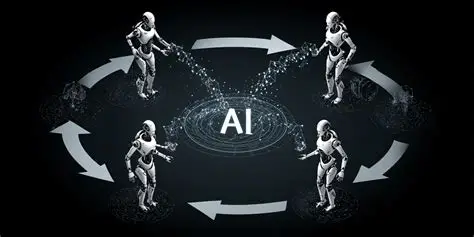
In Greek mythology, an ouroboros is a serpent that eats its own tail, forming a continuous circle. It’s an apt metaphor for what’s happening. Many marketing organizations are stuck in a slow, self-defeating cycle that’s easy to miss until the damage is done.
Related:How To Protect Your Most Important (and Undervalued) Marketing Asset
Yet, the ouroboros also represents rebirth. That’s the better metaphor to inspire organizations to emerge stronger. But rebirth doesn’t happen on its own.
To understand how organizations actually break the cycle in favor of long-term growth, we spoke with CMOs, content leaders, and staffing experts. Three key issues emerged, centered on what happens when organizations stop investing in the conditions that make marketing work.
The disappearing junior marketer
CMI’s research finds that 34% of marketers report a decrease in entry-level and new graduate hiring in their organization over the last two years, with only 14% reporting an increase.
Mitangi Parekh, director of content marketing at cybersecurity company eSentire, sees it happening. More organizations ask themselves, she says, “Why are we hiring even a contractor to do some of this admin-level work if you have something like Claude or ChatGPT that can do this?”
Charles Knuth, product marketing lead at Pave, says, “The junior marketer is becoming an endangered species in tech.”
The compensation data company tracks the numbers closely. Charles shares its proprietary data: “Entry-level representation dropped from 8% to 4% in just two years, and AI tools absorbing executional work is a big reason why.”
In that same timeframe, 28% of marketers CMI surveyed report that their organization has hired overqualified candidates, filling mid-level roles with people who have higher-level experience, further closing entry points for talent.
Related:The Missing Generation: How AI Is Reshaping Content and Marketing Roles in 2026
The consequences have a long-term impact because junior roles are where marketers learn to think. “You need to have that marketing background and experience to be able to know whether something is good or not,” says Virginia Ford-Young, chief marketing officer at S&P Global Ratings.
Marketers must develop that discernment somewhere, yet most organizations don’t have a plan for where.
The burnout tax
CMI’s research finds 59% of marketers (and 66% of leaders) say their workload is at least somewhat overwhelming. Seventy-six percent feel like they’re doing the work of more than one person. And 91% believe their organizations expect too much.
AI efficiency gains aren’t relieving the pressure. They’re raising the bar.
Gina Balarin, marketing consultant, author, and board member of the Chartered Institute of Marketing, sees where this trend has led. “We’ve reached a crisis point,” she says, “where humans are using AI tools to make themselves more productive to a point of exhaustion.”
The consequences show up in the CMI data. Thirty-nine percent of marketers are actively pursuing or highly interested in finding a new job in 2026. Almost one in four freelances on the side.
Related:How Long Will Content and Marketing Careers Remain Viable? [Research]
These could be warning signs that valuable team members are building an exit strategy. CMI and Ravn Research developed an assessment tool to help you calculate employee flight risk and get specific intervention recommendations.
Pave’s data shows marketing has a 24% turnover rate, the highest overall rate of any function in tech. (Engineering turnover is at 17%.) “It’s not just a talent or compensation problem. It’s a signal about how quickly marketing regimes fall in and out of favor,” Charles says.
Organizations underestimate how much that matters until people depart with their institutional knowledge and hard-won experience.
The real necessary skills
Even as organizations invest in AI training, a disconnect exists between what teams are learning and what the work actually demands.
In CMI’s research, strategic and critical thinking tops the skills list for staying relevant, cited by 65% of marketers and 72% of leaders. AI skills rank second. Soft skills, like communication, storytelling, and adaptability, come third.
While training targets the second priority, the first is largely left to chance. Molly Soat, vice president of professional development at the American Marketing Association (AMA), sees the disconnect as a leadership problem. Focusing only on tools and tactics is shortsighted because the tools of today won’t be the tools of tomorrow.
“The best leaders are looking to grow a whole marketer and a whole marketing team, and that includes all of those human capabilities,” she says.
How to progress toward renewal
None of these problems are inevitable if leaders take deliberate actions now to support ongoing team development.
Invest in your talent pipeline
Advocate for new hires and create alternative pathways like apprenticeships, rotational programs, or shadowing to give early-career marketers exposure to senior-level thinking.
Virginia does both at S&P Global Ratings. Her team has a junior apprentice and hires summer interns with the goal of converting them to permanent roles.
She backs this up with monthly town halls that incorporate learning opportunities and job shadowing as a core development tool.
“Being on calls, being in an environment where you can sit in an office and hear people,” she says, is “by far the best” way for junior marketers to develop perspective and sharpen their thinking.
Think beyond tool training
CMI finds 27% of marketers say their organization offers no career development opportunities. Of those whose organizations do, only 25% are very satisfied.
So, for many teams, the starting point is simply having a development program.
AI skills should be a part of it, but the training should cover it properly to prevent teams from using the tools before understanding the technology. Otherwise, you end up with surface-level adoption, Mitangi says.
The program should also address the skills that outlast the tools: innovation, adaptability, strategic thinking, and communication, Molly notes.
At the AMA, Molly’s team works with companies to build learning programs for their marketing teams, starting with a competency framework that’s deliberately tool-agnostic. They assess team members against those skills and then build custom learning paths from the results.
“Basing it on those foundational human skills is critical,” she says.
Relieve the right pressure
The goal of handing work off to AI should be to genuinely free people for higher-impact work, not extract more from fewer people.
Virginia has made this a formal initiative at S&P Global Ratings, working with functional leads to map workflows and then identifying where AI agency colud take over, recurring tasks. She asks her team, “What day-to-day pain points get in the way of more strategic work?”
Addressing those through agentic AI enables the team to spend more time on stakeholder management, engaging with the market, and focusing on high-impact strategic initiatives, Virginia explains.
Michael Weiss, practice leader for content, social, and digital at Big Valley Marketing, makes a similar point from a different angle. He tells his team to consciously protect thinking time: “Make sure you have time to stare at a wall. Sit and think. Marinate on the ideas.”
That space, he says, is where listening, ideating, and innovation happen. It’s the work AI can accelerate but never replace.
Leaders should also pay attention to their team members. Gina offers this advice: “Keep an eye on the signs and signals that your teams are healthy — emotionally and mentally, not just physically.”
Take ownership of what you control
This advice is for individual marketers as much as it is for leaders.
“Own your career,” Virginia says. “Don’t wait for someone else to own it for you because your bosses come and go.”
She advocates for getting clear on two things: what you stand for now as a marketer, and what you want to stand for. Then actively close the gap.
Gina’s advice adds a practical layer: “Build your networks wide and deep. And be impactful far beyond your remit.” The social media expert who only interacts with their direct manager, she says, is far easier to replace than one connected across the organization who contributes to broader conversations.
Molly’s counsel runs parallel: Embrace the new tools and keep building the hard-won human skills alongside them. “That will continue to have you stand out,” she says.
Uncoiling the snake
The pressure to do more with less is real, and AI only intensifies it. But zoom out, and a different picture emerges. The leaders who see this period as a turning point ask a harder question: What do we actually want to build?
The answer includes investing in the people entering the profession and the ones already on your team. It involves building development programs that treat human skills as seriously as tool fluency. And it calls for using the time AI frees up for the thinking, creativity, and relationship-building that make marketing worth doing.
The ouroboros halts its cycle of self-destruction only when someone chooses to intervene.