
Basics of Digital Marketing: Everything You Need to Know to Get Started
We live in an era where a teenager with a phone can reach more people in a day than a billboard could in a month. That’s the power of digital marketing — and it’s reshaping how businesses of every size grow, compete, and survive. But with so many channels, tools, and buzzwords flying around, getting started can feel overwhelming.
This guide cuts through the noise. Whether you’re a student, a small business owner, or a professional looking to upskill, here’s what you genuinely need to understand about digital marketing — from first principles to practical channels.
What is digital marketing?
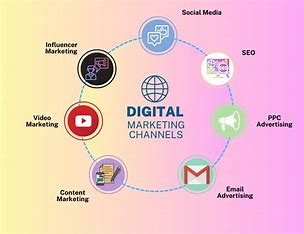
Digital marketing is the promotion of products, services, or brands using digital channels — the internet, search engines, social media, email, websites, and mobile apps. Unlike traditional marketing (TV, print, radio), digital marketing is measurable, interactive, and highly targetable.
The goal is simple: connect with the right audience, at the right time, in the right place — and drive them to take a meaningful action, whether that’s buying a product, signing up for a newsletter, or simply building awareness of your brand.
The core pillars of digital marketing
The core pillars of digital marketing
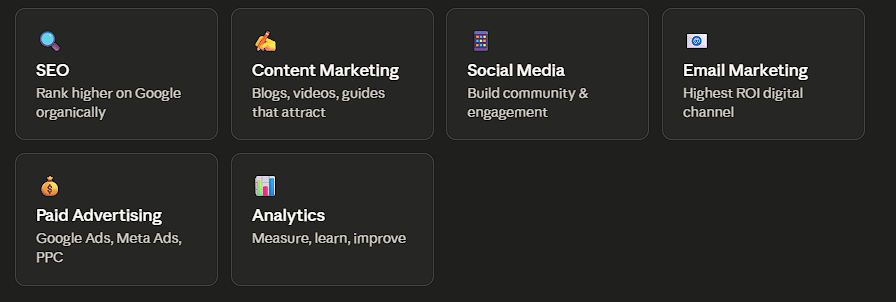
Think of digital marketing as a building. Each pillar supports the structure. Remove one and the building still stands — but it’s weaker. Here are the six essential pillars:
Analytics: the backbone of it all
None of the above works without measurement. Digital marketing’s greatest advantage over traditional marketing is that almost everything is trackable. Tools like Google Analytics 4 (GA4), Google Search Console, Meta Business Suite, and platforms like HubSpot show you exactly where your traffic comes from, what actions users take, where they drop off, and which campaigns deliver real ROI.
The discipline of data-driven decision-making — forming a hypothesis, running a test, reading the results, and iterating — is what separates good digital marketers from great ones. Test everything: headlines, landing page copy, email subject lines, ad creatives, CTA buttons. Every failure teaches you something. Every success scales.
Bringing it all together
The most effective digital marketing strategies don’t treat these pillars in isolation. A well-optimised blog post (SEO + Content) gets shared on social media, drives email sign-ups, which are then nurtured through automated sequences — and underperforming content gets boosted with paid ads while analytics identify which topics resonate most. That’s a flywheel.
Digital marketing is not a switch you flip. It’s a system you build, test, and refine over time. The brands that win aren’t necessarily those with the biggest budgets — they’re the ones who understand their audience deeply, create genuine value, and measure what matters. Start with one channel, master it, then expand. Consistency beats perfection every time.
Search engine optimisation (SEO)
SEO is the art and science of getting your website to appear at the top of search engine results pages (SERPs) without paying for ads. When someone searches “best running shoes under ₹3000,” SEO is what determines whether your page shows up on page one or page ten.
Content marketing
Content marketing is about creating and distributing valuable, relevant content to attract and retain a clearly defined audience. Think blog posts, YouTube videos, podcasts, infographics, eBooks, and case studies. The guiding principle is: instead of interrupting people with ads, earn their attention by being genuinely useful.
Social media marketing
Social media marketing uses platforms like Instagram, LinkedIn, X (formerly Twitter), YouTube, and Facebook to build brand awareness, engage communities, and drive traffic. The key is understanding where your audience spends time — a B2B software company thrives on LinkedIn; a fashion brand lives on Instagram and Pinterest.
Email marketing
Often underestimated, email marketing consistently delivers the highest return on investment of any digital channel — historically around ₹3,600 returned for every ₹100 spent. Why? Because your email list is an audience you own. Unlike social media followers (who can disappear if a platform changes its algorithm), email subscribers are yours.
Effective email marketing means segmenting your list, personalising content, and automating sequences — welcome emails, abandoned cart reminders, re-engagement campaigns — so the right message reaches the right person at the right moment.
Pay-per-click (PPC) and paid advertising
PPC is a model where you pay for each click on your ad. Google Ads is the most dominant platform — your ad appears at the top of search results for specific keywords, and you’re charged only when someone clicks. This is powerful for targeting high-intent buyers who are actively searching for what you offer.