

WHAT IS PERSONAL FINANCE?
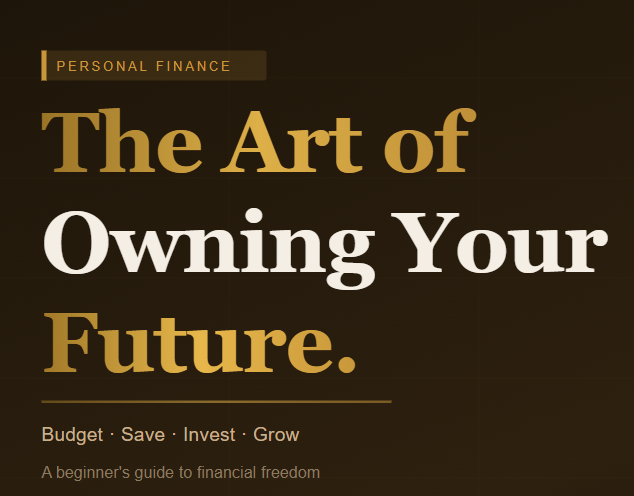
Personal Finance —
The Art of Owning
Your Future
Most people go through their entire lives earning money, spending it, and hoping things work out. Personal finance is the deliberate alternative — the practice of making your money work for you, not against you.
What Is Personal Finance?
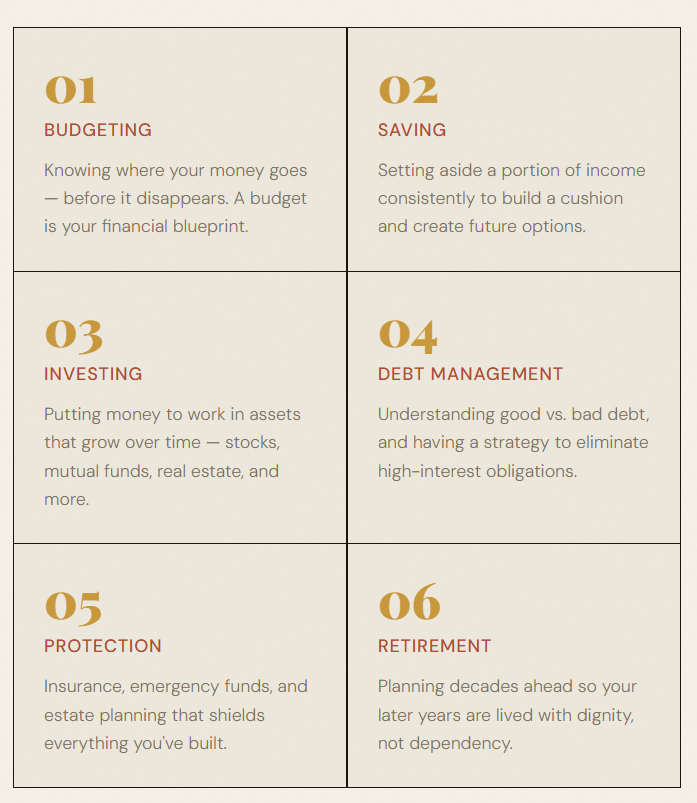
Personal finance is the process of managing your money to meet your life goals. It covers everything from how much you earn to how you spend, save, invest, protect, and plan for the future. Think of it as your relationship with money — and like any relationship, the quality of it shapes your quality of life.
At its core, personal finance answers a set of fundamental questions: How do I make more money? How do I keep more of what I make? Where should I put my savings? How do I protect my family if something goes wrong? And perhaps most importantly — how do I build a life I don’t need to escape from?
It is not just for the wealthy. In fact, personal finance matters more when resources are limited, because every rupee carries more weight and every decision has a more direct impact on daily life.
Why Personal Finance Matters
Financial stress is one of the leading causes of anxiety, broken relationships, and poor health globally. When you live paycheck to paycheck without a plan, every unexpected expense — a medical bill, a car repair, a job loss — becomes a crisis. Personal finance is the buffer between you and chaos.
Good personal finance habits create what economists call optionality — the freedom to make choices based on what you want, not what you can afford. Want to start a business? Take a sabbatical? Move to a new city? None of that is possible when money is a constant constraint.
Beyond individual freedom, financial literacy has a generational impact. Families that understand money tend to pass those habits down. Children who grow up in financially literate households are more likely to avoid debt traps, invest early, and build wealth across generations.
Where Most People Go Wrong
The biggest financial mistake is not starting. People delay budgeting because it feels restrictive, avoid investing because it feels risky, and ignore insurance because it feels unnecessary — until the day it isn’t. Procrastination is the single most expensive financial habit.
The second mistake is lifestyle inflation. As income grows, so do expenses — new phone, bigger apartment, premium subscriptions. Without intentional saving, higher earnings simply fund a more expensive version of the same financial insecurity.
And the third? Treating personal finance as complicated. It isn’t. The basics — spend less than you earn, save consistently, invest early, stay insured — are simple. The challenge is not understanding them. It is doing them.
Starting Your Financial Journey
You do not need a finance degree or a large salary to begin. Start with one clear step: track every expense for 30 days. Just awareness. Then build from there — a small emergency fund, a monthly SIP, a term insurance policy. Each step compounds, financially and psychologically.
The best time to take control of your finances was ten years ago. The second best time is today.
Why Personal Finance Matters
Financial stress is one of the leading causes of anxiety, broken relationships, and poor health globally. When you live paycheck to paycheck without a plan, every unexpected expense — a medical bill, a car repair, a job loss — becomes a crisis. Personal finance is the buffer between you and chaos.